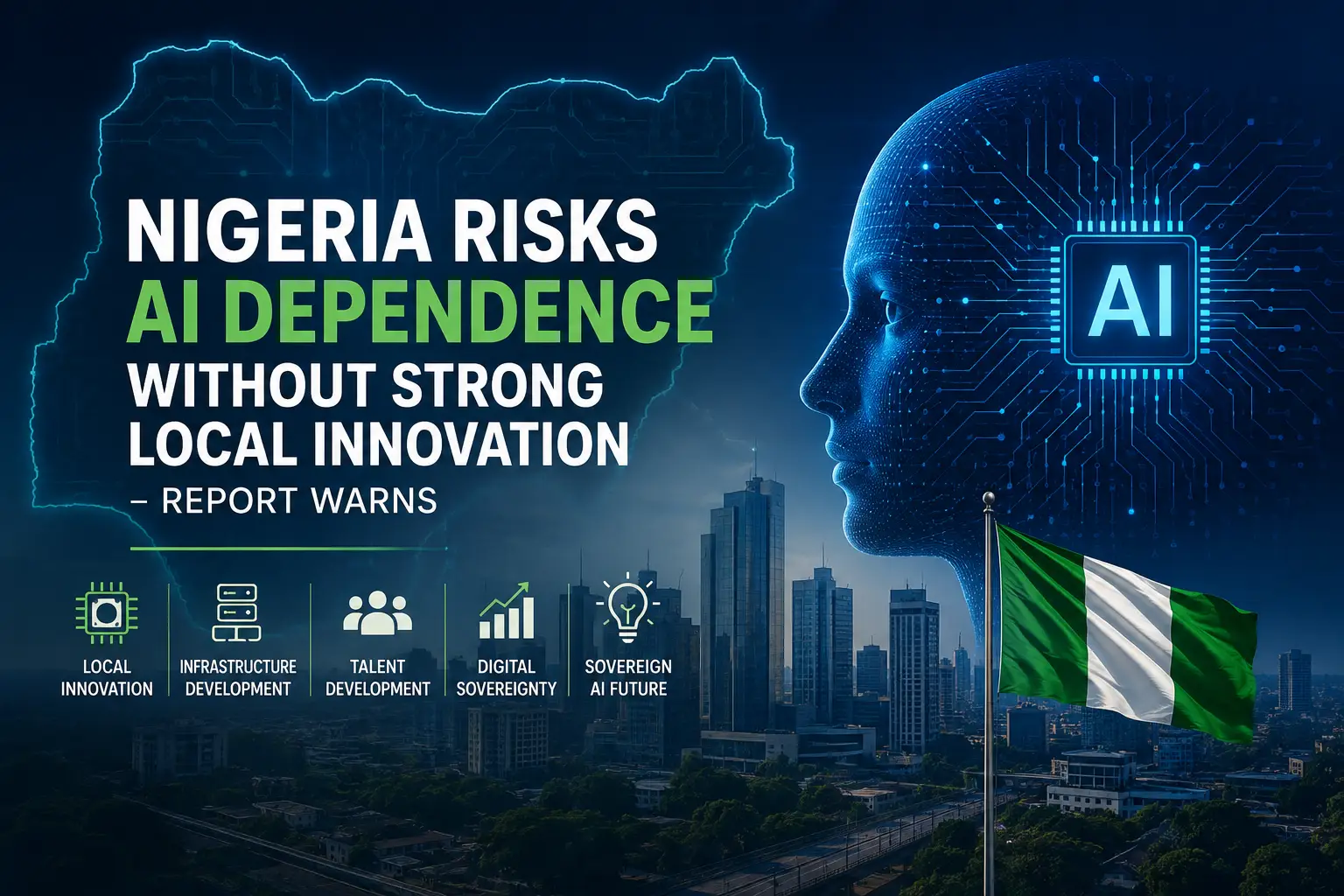
Nigeria could become increasingly dependent on foreign artificial intelligence (AI) technologies unless the country takes deliberate steps to develop indigenous AI innovation, infrastructure and talent, according to a new report.
The report, titled “Adoption of Artificial Intelligence in Nigeria: A Macro and Micro Economic Review,” found that Nigeria is among Africa’s fastest-growing adopters of AI. However, it warned that the country has not yet developed the institutional, technological and human capacity required to fully own, develop and sustain AI technologies.
The study was authored by Debola Ibiyode, Founder and Executive Director of the AI Empowerment Foundation and Founder and Chief Executive Officer of CarbonAI. It was conducted by OLGNova in collaboration with AI in Action Now.
Growing AI Adoption, Limited Local Ownership
According to the report, Nigeria’s growing dependence on foreign AI models, cloud infrastructure and software platforms could pose a threat to the country’s digital sovereignty and long-term economic competitiveness.
While Nigerians are generating significant amounts of data through AI-powered applications, much of the economic value generated from these activities ultimately flows to foreign technology companies that own the underlying platforms and infrastructure.
The report described the situation as a gap between AI adoption and AI ownership, noting that Nigeria is adopting the technology rapidly without developing the foundations needed to independently build and sustain it.
“Nigeria is not failing at AI; it is adopting AI faster than it is building the institutional, infrastructural and human foundations needed to sustain and own that adoption.”
The study reported that more than 70 per cent of Nigerians have interacted with generative AI tools, while 93 per cent of surveyed organisations have started adopting AI. Nearly one-third of these organisations are already deploying AI in advanced business operations.
Nigeria’s research ecosystem is also expanding. The report noted that Nigerian scholars have produced more than 11,600 academic publications related to AI, with the University of Ibadan reportedly recording the highest research output in the country.
AI Already Transforming Key Sectors
The report highlighted the growing impact of AI across several sectors of the Nigerian economy.
In healthcare, AI-powered solutions are being used to assist doctors with radiological image analysis, diagnose birth asphyxia in newborns and provide mental health support through intelligent chatbots.
Agriculture is another area where AI is showing significant potential. According to the study, AI-powered advisory platforms have helped increase crop yields by between 20 and 30 per cent while reducing production costs. Predictive maintenance and route optimisation technologies are also helping to minimise food waste and improve supply-chain efficiency.
Government services are beginning to adopt AI as well. The report referenced the Federal Civil Service’s Service Wise GPT initiative, alongside AI-powered traffic management pilots in Lagos and Abuja, which have reportedly reduced peak-hour travel times by approximately 20 per cent.
The Risk of AI Dependence
Despite these developments, Nigeria remains a relatively small contributor to the development of foundational AI models, indigenous datasets and domestic computing infrastructure.
The report warned that this dependence could expose the country to changing licensing policies, service disruptions and external control over critical digital infrastructure.
The concern extends beyond technology. As AI becomes increasingly integrated into the economy, countries that control AI models, computing infrastructure, datasets and intellectual property are likely to capture a larger share of the economic value created by the technology.
For Nigeria, the report suggests that simply becoming a major consumer of AI will not be enough.
AI Could Displace Jobs — But Also Create New Opportunities
The report also examined the potential impact of AI on employment.
It projected that automation could displace approximately nine million routine jobs by 2030, particularly in sectors such as banking, clerical services and public administration.
However, the outlook is not entirely negative. The study estimated that AI could also create around 11 million technology-enabled jobs if Nigeria makes substantial investments in digital skills development and workforce reskilling.
This means the impact of AI on Nigeria’s labour market could depend significantly on how effectively the country prepares its workforce for an AI-driven economy.
Building Nigeria’s Path to Sovereign AI
To achieve what it describes as “sovereign AI,” the report called for stronger collaboration and investment involving government, universities, technology companies and investors.
Among its recommendations are increased investment in:
- Local AI infrastructure and computing capacity
- Indigenous and high-quality datasets
- Nigerian-language AI technologies
- AI research and innovation hubs
- Affordable financing for technology startups
- Digital skills development and workforce reskilling
- University programmes focused on AI development and model building
The report particularly urged Nigerian universities to go beyond teaching students how to use existing AI applications and instead equip them with the skills required to build AI models, datasets and technologies.
Nigeria Must Move From AI Adoption to AI Ownership
Nigeria’s rapid adoption of artificial intelligence presents significant economic opportunities, but it also raises important questions about technological independence.
The country has a large population, a growing technology ecosystem, significant research capacity and an increasingly AI-aware workforce. However, without deliberate investment in local infrastructure, talent, datasets and intellectual property, much of the value generated by Nigeria’s AI economy could continue to accrue to foreign technology companies.
The central message of the report is therefore clear: Nigeria must move beyond simply consuming AI to developing, owning and exporting AI technologies.
The country’s long-term competitiveness in the global AI economy may ultimately depend not on how quickly Nigerians adopt foreign AI tools, but on how successfully Nigeria builds the capacity to create its own.

Engr Idris Adeiza, Aliyu is a Materials Engineer, technology professional, data and AI enthusiast, and entrepreneur.
He holds both Bachelor and Master’s degree in Engineering from Ahmadu Bello University, Zaria, and is currently pursuing his second Master’s degree in Disaster and Risk Management. His interests include AI, Data Engineering, Business Intelligence, Sustainable Engineering, and Emerging Technologies.
Engr. Idris founded Drisa Engineering Solutions Limited and Drisa FarmDepot & Agric Solutions, developing practical engineering and technology solutions.
His writing explores AI, Data, Sustainable Engineering, Digital Transformation, and Technology Developments in Nigeria and Globally.