Nigeria stands at the precipice of an audacious economic transformation. With national policy targeting a $1 trillion gross domestic product by 2030, enterprise leaders face a profound operational reality: sustained hyper-growth cannot be engineered using legacy communication protocols that alienate more than half the country’s population. While high-bandwidth metropolitan centers enjoy modern web interfaces, the informal economy—which accounts for an estimated 55% to 65% of national output—operates predominantly through spoken dialogue across Hausa, Yoruba, Igbo, and Nigerian Pidgin.
For decades, enterprise customer touchpoints have relied on static Interactive Voice Response (IVR) trees or text-centric digital banking and commerce applications. These systems impose an implicit “literacy tax” on consumers and an operational latency tax on enterprises. Today, the convergence of multilingual Automatic Speech Recognition (ASR), lightweight reasoning Large Language Models (LLMs), and low-latency speech synthesis has birthed a transformative paradigm: Autonomous Multilingual Voice Assistant AI Agents. Deployed at enterprise scale, these sovereign voice agents are poised to become the connective tissue of Nigeria’s digital and real economy.
The Architectural Shift: From Scripted IVR to Autonomous Agentic Voice
Traditional telephony bots were brittle, deterministic state machines. They failed the moment a caller combined languages, spoke in non-standard dialects, or drifted outside narrow decision paths. In contrast, modern enterprise-grade voice agents utilize an interconnected, three-stage agentic pipeline engineered for low latency:
- Acoustic & Semantic Localization: Tailored ASR front-ends trained on dialectal nuance, code-switching (e.g., interleaving English and Nigerian Pidgin), and ambient noise environments typical of bustling markets like Balogun or Bodija.
- Contextual Orchestration & Dynamic Tool-Use: Autonomous cognitive layers capable of querying enterprise APIs (such as core banking ledgers, ERP systems, and logistics databases) in real time while maintaining conversational memory.
- Neural Low-Latency Text-to-Speech (TTS): Natural-sounding, phonetically authentic local-language generation optimized to stream audio back across low-bandwidth GSM and SIP channels in under 600 milliseconds.
“Voice is not merely a user interface convenience in emerging markets; it is the most democratic economic protocol ever devised. When an enterprise connects an autonomous multilingual voice model to its operational core, it converts previously inaccessible populations into active economic participants.”
Transforming Core Pillars of the Nigerian Macroeconomy
1. Deepening Financial Inclusion Beyond the App Store
Despite the proliferation of fintech innovations across Lagos and Abuja, approximately 26% of Nigerian adults remain completely unbanked, with many more underbanked due to functional illiteracy or digital distrust. Autonomous voice agents deployed via standard telephony (PSTN/GSM) eliminate the requirement for smartphones, data plans, or text literacy.
A subsistence trader in Kano can dial a toll-free enterprise agent, negotiate a micro-inventory loan in native Hausa, receive real-time credit scoring feedback, and execute a settlement without typing a single character. By bridging agent banking networks and core banking systems with natural voice agents, tier-1 financial institutions can slash customer acquisition and servicing costs by over 70% while unlocking vast pools of untapped rural deposits.
2. Agritech and Real-Time Supply Chain Optimization
Agriculture remains the bedrock of Nigerian employment, yet value chains suffer catastrophic post-harvest losses driven by information asymmetry. Farmers often lack real-time visibility into market clearing prices at terminal markets, storage availability, and weather forecasts.
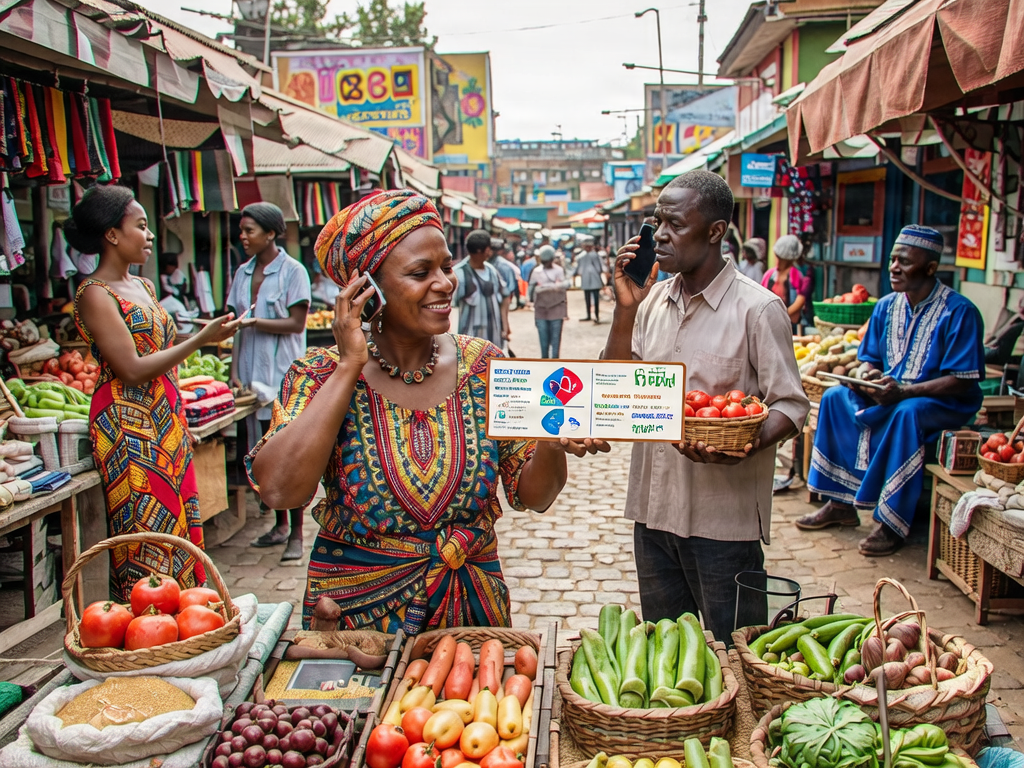
Enterprise agribusinesses, fertilizer manufacturers, and commodity trading platforms are deploying multilingual voice bots accessible via basic 2G handsets. A maize farmer in Oyo State can converse in Yoruba to check current commodity pricing in Mile 12, reserve warehouse space, and schedule pickup logistics. By decentralizing enterprise access to the edge of the supply chain, autonomous agents mitigate exploitation by intermediary cartels and enhance national food security.
3. Public Sector Efficiency and Citizen Service Delivery
Bureaucracy remains a well-documented headwind to Nigerian enterprise velocity. Multilingual voice agents offer a radical solution for digital public infrastructure (DPI). When integrated into public institutions—such as the National Identity Management Commission (NIMC), the Federal Inland Revenue Service (FIRS), and state healthcare triage networks—autonomous agents can handle millions of concurrent citizen queries in their indigenous tongues. This drastically shrinks operational overhead, eliminates backlogs, and accelerates statutory compliance for micro-enterprises.
Engineering for the Nigerian Edge: Critical Technical Realities
Successfully operationalizing voice agents in Nigeria requires engineering past conventional Western assumptions regarding compute, bandwidth, and dataset cleanliness. Strategic enterprise architects must confront three primary imperatives:
- Sovereign Data Collection and Afrocentric Fine-Tuning: Global foundational models frequently hallucinate or exhibit severe comprehension degradation when processing accented or code-switched Nigerian speech. Enterprises must leverage open datasets from pioneering initiatives like Masakhane and invest in continuous real-world acoustic capture to fine-tune local models.
- Telephony-First Integration via SIP and GSM: While high-end WebRTC integrations suit corporate portals, enterprise scale in Nigeria demands native integration with local telco infrastructure (MTN, Airtel, Glo, 9mobile). Voice agents must seamlessly bridge with Session Initiation Protocol (SIP) trunks and handle fluctuating packet delivery over edge networks.
- Data Sovereignty and Regulatory Compliance: In alignment with the Nigeria Data Protection Act (NDPA), enterprises handling sensitive financial, biometric, or personal vocal data must implement robust local inference strategies or deploy within zero-trust sovereign cloud zones, preventing cross-border exfiltration of critical citizen communications.
The Strategic Imperative for Nigerian Enterprise Leaders
The enterprise adoption of autonomous multilingual voice agents is neither an experimental luxury nor a downstream customer-support optimization. It is an infrastructure-level catalyst. As Nigeria navigates currency stabilization, industrial modernization, and structural economic realignments, the companies that will lead the next century are those architecting systems that speak the languages of the people who power the economy.
By translating the profound complexities of modern enterprise software into the universal simplicity of the human voice, corporate Nigeria can bridge historical divides, democratize economic participation, and establish an engine of productivity worthy of its continental stature.

Engr Idris Adeiza, Aliyu is a Materials Engineer, technology professional, data and AI enthusiast, and entrepreneur.
He holds both Bachelor and Master’s degree in Engineering from Ahmadu Bello University, Zaria, and is currently pursuing his second Master’s degree in Disaster and Risk Management. His interests include AI, Data Engineering, Business Intelligence, Sustainable Engineering, and Emerging Technologies.
Engr. Idris founded Drisa Engineering Solutions Limited and Drisa FarmDepot & Agric Solutions, developing practical engineering and technology solutions.
His writing explores AI, Data, Sustainable Engineering, Digital Transformation, and Technology Developments in Nigeria and Globally.